


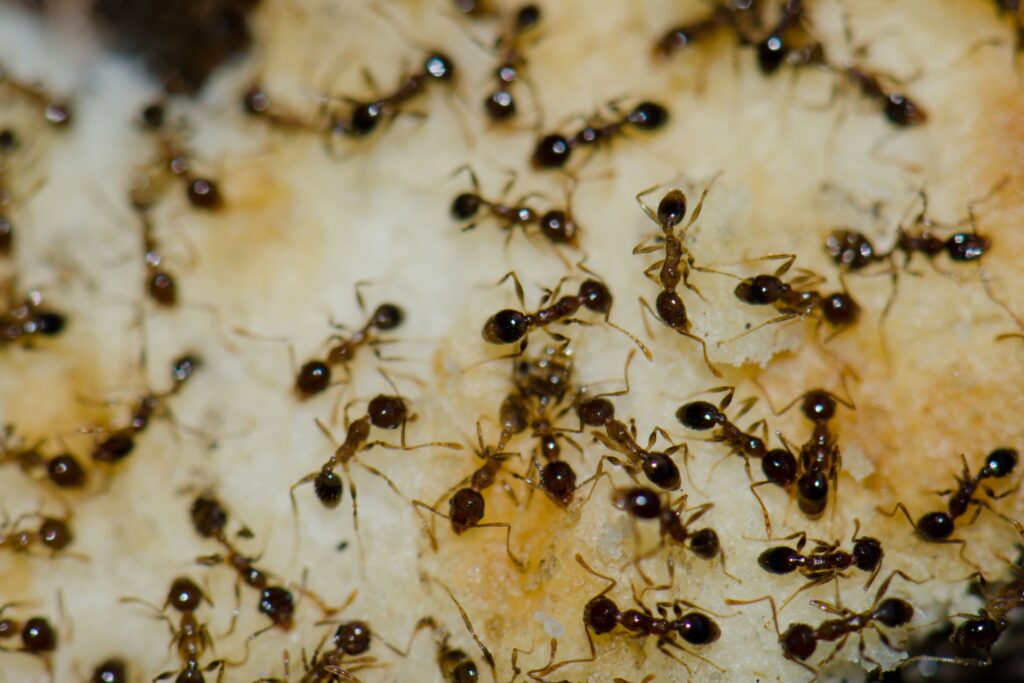
Ant problems in Las Vegas range from temporary nuisances to persistent infestations requiring professional intervention. With multiple ant species active throughout the valley—including Argentine ants, harvester ants, carpenter ants, and occasional fire ants—effective ant control requires understanding which species you’re dealing with and implementing appropriate treatment strategies. The “best” pest control company for ant elimination combines species-specific expertise, proven treatment methods, and comprehensive approaches addressing both visible ants and the colonies producing them. Prime Pest Control’s ant control services deliver the specialized knowledge Las Vegas ant problems require.
Why Ant Species Identification Matters
Not all ants respond to identical treatments, making species identification the foundation of effective ant control:
- Argentine ants form massive supercolonies with multiple queens and interconnected nests. These small brown ants trail extensively through homes seeking food and water. Eliminating Argentine ants requires targeting entire colony networks rather than just visible workers.
- Harvester ants build large mounds in yards and can deliver painful stings. These ants primarily live outdoors, but their painful stings create problems when they nest near patios, play areas, or walkways. Treatment focuses on mound elimination.
- Carpenter ants don’t eat wood but excavate galleries for nesting in moisture-damaged wood. Finding and eliminating carpenter ant colonies requires identifying moisture problems and treating nest locations rather than just spraying perimeters.
- Pavement ants nest under concrete slabs, in cracks, and around foundations. These ants create small dirt mounds and trail into structures. Effective control reaches nests in cracks and sub-slab locations.
- Odorous house ants get their name from the smell they produce when crushed. These ants nest in wall voids, under floors, and in other protected locations. Colony elimination requires reaching hidden nests.
The best ant control companies identify which species you’re dealing with rather than treating all ants identically with generic approaches.
What Effective Ant Control Includes
Superior ant elimination goes beyond simple perimeter spraying:
- Property inspection identifies ant species, trailing patterns, entry points into structures, outdoor nesting locations when visible, and conducive conditions attracting ants.
- Targeted treatment addresses ants where they actually nest and trail rather than just treating surfaces. This might include crack and crevice applications, targeted exterior treatments, baiting strategies for colony elimination, and treating nests directly when accessible.
- Prime’s Triple D-Fence provides comprehensive ant control through power spray, creating barriers ants encounter when approaching structures; products designed for ants to carry back to colonies, affecting entire populations; and wall injection, reaching ants nesting in wall voids.
- Sanitation and exclusion recommendations address factors attracting ants and allowing their entry. While pest control companies can’t control everything on your property, guidance about reducing attractants and sealing entry points supports treatment effectiveness.
- Follow-up service ensures ant problems are fully resolved rather than declaring success after initial treatment regardless of outcomes.
Why Some Ant Treatments Fail
Homeowners attempting DIY ant control and some professional services produce disappointing results for common reasons:
- Surface treatments only kill ants contacting treated areas but don’t affect colonies producing workers. Visible ants decrease temporarily before new workers replace them.
- Wrong products for target species mean treatments ineffective for the specific ants you’re dealing with. Products that work well for one ant species might fail completely for others.
- Incomplete application misses areas where ants actually trail and nest. Treating obvious areas while missing hidden trails and entry points allows problems to persist.
- No follow-up assumes initial treatment permanently eliminates ants without verifying results or addressing colonies that survive initial treatment.
- Ignoring multiple colonies when extensive ant problems involve numerous colony locations. Eliminating one colony while others remain active produces temporary improvement before problems return.
The Colony Elimination Approach
The most effective ant control targets colonies rather than just killing visible workers. Baiting strategies exemplify this approach:
Modern ant baits work by attracting foraging ants that consume bait and carry it back to colonies where it’s shared with other workers, larvae, and queens. This distributes product throughout the entire colony, eliminating populations that perimeter sprays can’t reach.
Baiting requires patience because colony elimination takes days or weeks as product spreads through ant populations. Homeowners expecting immediate results sometimes abandon baiting too early before it achieves full effectiveness.
Different ant species require different bait formulations. Argentine ants prefer protein-based baits, while other species target sugar-based products. Using appropriate baits for target species increases success rates.
Strategic bait placement along active trails, near nest entrances, and in areas where ants forage maximizes ant contact with baits.
Entry Point Sealing
While eliminating existing ant colonies resolves current problems, preventing new infiltration requires addressing how ants enter structures:
Ants exploit tiny gaps around doors and windows, cracks in foundations or walls, utility penetrations, and construction gaps where different materials meet. Sealing these entry points reduces ant infiltration.
The best pest control companies identify entry points during inspection and provide recommendations for sealing, though comprehensive sealing might require homeowner cooperation or additional services beyond basic pest control.
Prime’s Advantage in Ant Control
What makes Prime effective for Las Vegas ant problems?
- Experience with local ant species means technicians recognize which ants they’re dealing with and know appropriate treatment approaches for each. This beats generic pest control attempting to treat all ants identically.
- Multiple treatment techniques provide flexibility to address different ant species and infestation severities. Carpenter ants need different approaches than Argentine ants.
- Combination approaches using both contact treatments for immediate reduction and colony-targeting methods for long-term elimination deliver better results than single-method treatments.
- Ongoing service maintains ant control through seasonal activity changes rather than providing one-time treatments that lose effectiveness as new colonies develop or surviving colonies rebound.
- Service guarantees mean if ant problems persist despite treatment, Prime returns to address them at no additional charge rather than telling customers to tolerate ants until the next scheduled visit.
Questions to Ask Potential Pest Control Companies
When evaluating companies for ant control, ask:
What ant species are common in Las Vegas, and how do treatments differ between them? How do you identify which ant species I have? What treatment approaches do you use for ant elimination? Do you provide colony-targeting treatments or just perimeter spraying? What should I expect in terms of timeline for results? What happens if ants persist after initial treatment?
Companies demonstrating genuine ant expertise provide specific answers rather than generic responses about “killing ants.”
Las Vegas’s ant problems require more than basic perimeter spraying to solve effectively. The best pest control company brings species-specific knowledge, proven treatment methods, and commitment to actual ant elimination rather than temporary reduction. Contact Prime Pest Control for ant control combining Las Vegas expertise with comprehensive treatment strategies that actually eliminate ant problems.