


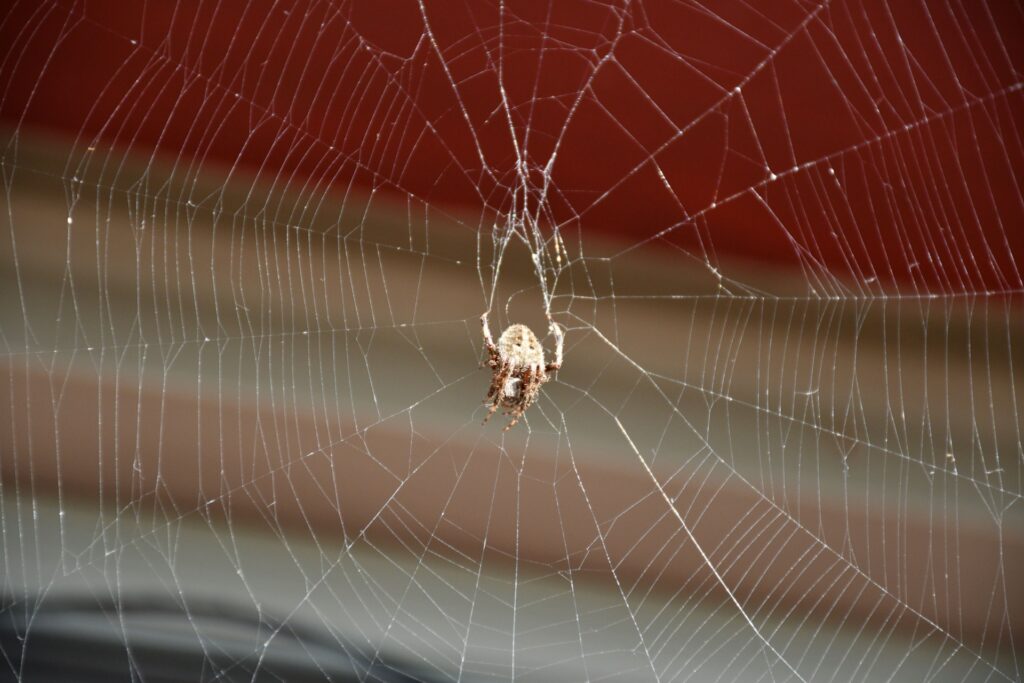
Most Las Vegas homeowners have tried to manage spiders on their own at some point—knocking down webs, spraying corners with an over-the-counter product, or relocating the occasional wolf spider that wandered into the garage. These efforts provide temporary relief, but they do not address the underlying reasons spiders are there in the first place. If you have been dealing with recurring spider activity and are considering professional spider control, understanding how the process actually works will help you see why it delivers results that DIY methods cannot match.
Why DIY Spider Control Falls Short
There is a fundamental gap between what homeowners typically do about spiders and what is actually required to reduce spider populations on a property. The most common DIY approaches—web removal and contact-kill sprays—address the symptoms without touching the cause.
- Web removal alone does not reduce spider populations. Spiders that lose their web simply build a new one, often in the same location. Removing webs without treating the spider or its harborage area is a temporary cosmetic fix.
- Contact-kill sprays only affect the spiders you can see. Over-the-counter sprays kill on contact, but they leave no meaningful residual protection. Spiders hiding in block walls, crevices, wall voids, and other concealed areas are unaffected.
- Ignoring the insect population sustains the cycle. Spiders are predators. As long as there is a food source—crickets, moths, roaches, ants, beetles—spiders will continue to inhabit and return to the property. Spider control without insect control is incomplete.
Step 1: Inspection and Assessment
Professional spider control begins with an inspection of the property to understand the scope of the issue. A trained technician will:
- Identify which spider species are present and determine whether any medically significant species (such as black widows or desert brown spiders) are active on the property
- Locate harborage areas—garages, block walls, eaves, meter boxes, window and door frames, storage areas, and landscape features
- Assess the level of insect activity, since high insect populations directly correlate with high spider populations
- Identify conditions on the property that contribute to spider and insect attraction, such as outdoor lighting, irrigation near the foundation, dense vegetation, and clutter in garages and storage areas
This assessment shapes the treatment plan and ensures that the approach is targeted to the specific conditions on the property rather than following a generic protocol.
Step 2: Exterior Barrier Treatment
The foundation of professional spider control is a barrier treatment applied around the exterior of the home. This typically involves a power spray applied to:
- The foundation and lower exterior walls, extending approximately three feet up and three feet out
- Door and window frames
- Garage entries and the perimeter of the garage floor
- Eaves, soffits, and roofline edges where web-building spiders anchor their webs
- Block wall bases, caps, and joints along perimeter fencing
The products used in professional treatments leave a residual that continues working after the initial application. Spiders and insects that cross the treated surface are exposed to the product over the following weeks, which provides ongoing protection between service visits.
Step 3: Crack, Crevice, and Harborage Treatment
Spiders—particularly black widows—spend the majority of their time hidden in sheltered, undisturbed locations. A barrier spray on the exterior surface does not reach spiders inside block wall cores, expansion joints, weep holes, or structural voids. Direct treatment of these areas is a critical step that separates professional spider control from a basic perimeter spray.
Crack and crevice treatments apply product into the tight spaces where spiders actually live—using professional application tools that deliver the material into wall voids, gaps around utility penetrations, the joints and hollow cores of block walls, and other concealed areas that surface sprays cannot reach.
Step 4: Wall Injection
For properties with significant spider harborage inside block walls, wall injection treatment takes crack and crevice work a step further. Specialized tools inject product directly into the interior of block walls, treating the hidden voids where spiders and insects nest and shelter during the day.
This method is particularly effective against black widows, which commonly establish webs inside block wall caps and crevices. It is also effective against the insects that attract spiders to these areas in the first place, addressing both the predator and the prey in a single treatment step.
Step 5: Insect Reduction
Because spiders are sustained by the insect population on the property, reducing that food source is one of the most impactful components of a spider control program. The same barrier treatments, crack and crevice applications, and wall injections that target spiders also target the crickets, roaches, ants, and other insects that draw them to the property.
Additional steps may include:
- Treating landscape beds and ground cover where insects congregate
- Addressing standing water and irrigation issues that attract moisture-seeking insects
- Recommending changes to outdoor lighting to reduce insect attraction near the home
As the insect population decreases, spider activity follows—making each subsequent treatment more effective than the last.
Step 6: Web Removal and Monitoring
Professional service typically includes removal of existing webs during each visit. This serves two purposes: it eliminates established harborage and makes it easier to monitor for new spider activity between treatments. If new webs appear in areas that were previously treated, it signals that the treatment plan may need adjustment—and a good provider will adapt accordingly.
Step 7: Recurring Service
The desert landscape surrounding Las Vegas continuously introduces new spiders and insects to residential areas. A single treatment reduces the current population, but ongoing service is what prevents it from re-establishing. Recurring visits maintain the barrier, treat new harborage areas as they develop, and keep insect populations suppressed throughout the year.
Why Prime Pest Control Delivers Superior Results
Prime Pest Control’s Triple D-Fence system follows this exact process—barrier treatment, harborage and crevice treatment, wall injection, insect reduction, and recurring maintenance. The system was designed for the Las Vegas Valley’s specific pest pressures, including the spider species and insect populations that are common in this desert environment.
As a locally owned company based in Henderson with over 6,000 homes serviced and a 99% satisfaction rate, Prime has the experience, the methods, and the commitment to deliver spider control that actually lasts. The company’s eco-friendly, pet-safe products and Pest Free or Money Back Guarantee provide additional confidence that the investment will deliver real, measurable results.
If you want to understand how professional spider control can reduce activity around your Las Vegas home, contact Prime Pest Control to schedule a free quote and see the difference a targeted, multi-layered approach can make.