




Black widow spiders are one of the most recognized—and most feared—pests in the Las Vegas valley. Their reputation is well earned. Black widows are one of only a few spider species in North America whose venom is medically significant, and they are common enough in the Las Vegas area that most homeowners will encounter one at some point. If you have seen a spider on your property that you suspect is a black widow, knowing how to identify it, understanding the actual risks, and taking steps toward professional spider control are the right next moves.
How to Identify a Black Widow
Black widows are distinctive once you know what to look for, but they are also commonly confused with other dark-colored spiders. Here is how to identify a true black widow:
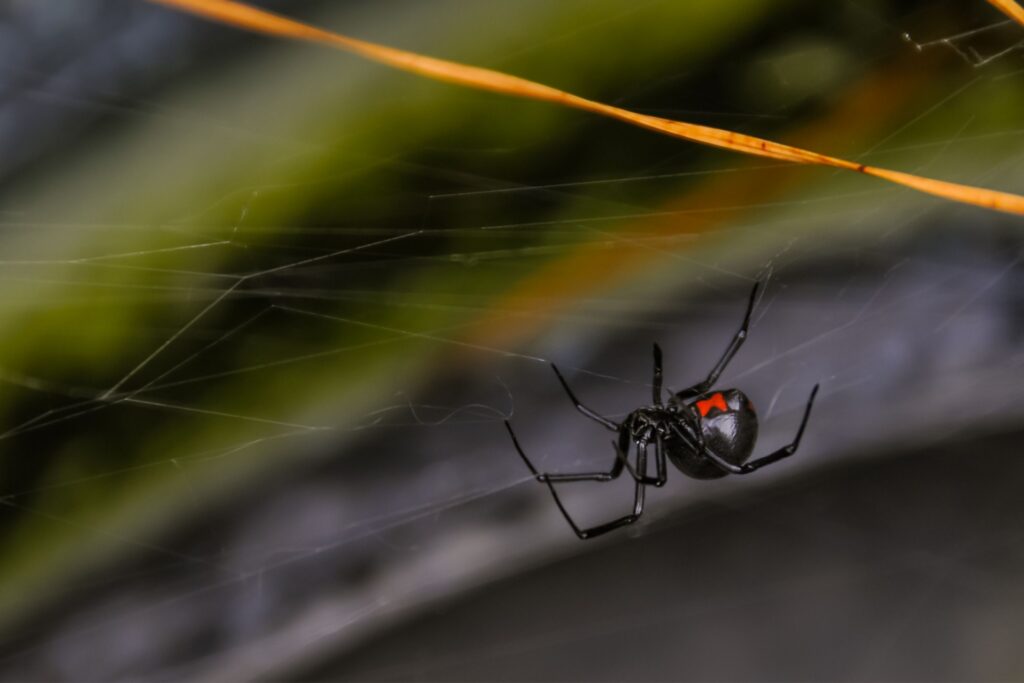
- Female black widows are the ones most people picture. They have a shiny, jet-black body with a round, bulbous abdomen. The defining feature is a red or reddish-orange hourglass-shaped marking on the underside of the abdomen. Females are approximately 1 to 1.5 inches in total length, including the legs.
- Male black widows are smaller, lighter in color (often brown or gray), and have less distinct markings. Males are not considered medically significant because their fangs are too small to deliver a meaningful amount of venom.
- Immature black widows may be lighter in color with white or yellowish markings that darken as they mature. They are often mistaken for other species.
- Web structure. Black widows build irregular, tangled webs that lack the organized pattern of orb-weaving spiders. The silk is notably strong and sticky. Webs are typically built close to the ground in sheltered, undisturbed areas.
Where Black Widows Are Found in Las Vegas
Black widows prefer dark, sheltered, undisturbed locations. In the Las Vegas valley, they are commonly found in:
- Garages, particularly in corners, behind stored items, and under workbenches
- Block wall caps and crevices along perimeter fencing
- Meter boxes, electrical panels, and utility access points
- Under outdoor furniture, grills, and decorative items that are not moved frequently
- Inside storage sheds, pool equipment enclosures, and landscape boxes
- Woodpiles, rock piles, and debris along the foundation
- Shoes, gloves, and clothing left in garages or outdoors
Black widows are not aggressive spiders. They do not seek out humans or chase them. Bites almost always occur when the spider is accidentally pressed against skin — reaching into a box without looking, putting on a shoe that has been sitting in the garage, or moving stored items where a web has been built.
How Dangerous Are Black Widow Bites?
Black widow venom is a neurotoxin that affects the nervous system. For healthy adults, a bite is painful and unpleasant but rarely life-threatening. However, the symptoms can be significant and should be taken seriously.
Common symptoms of a black widow bite include:
- Immediate sharp pain at the bite site, followed by localized swelling and redness
- Muscle pain and cramping that can spread from the bite area to the abdomen, back, and chest
- Nausea, sweating, and elevated blood pressure
- Headache and general feelings of malaise
Symptoms typically develop within 30 minutes to a few hours after the bite and can last 24 to 72 hours in most cases.
The risk is higher for certain groups:
- Young children are more vulnerable due to their smaller body size relative to the amount of venom injected. Any child bitten by a black widow should receive medical attention promptly.
- Elderly individuals may experience more pronounced symptoms and longer recovery.
- People with compromised immune systems or cardiovascular conditions may be at elevated risk for complications.
If you are bitten by a black widow and experience symptoms beyond localized pain—particularly muscle cramping, difficulty breathing, or chest tightness—seek medical attention. Clean the bite area, apply ice, and try to remain calm while getting to a medical facility.
Reducing Black Widow Risk Around Your Home
Because black widows prefer undisturbed, sheltered spaces, the most effective prevention involves reducing those conditions around your property:
- Declutter garages, storage areas, and sheds regularly and avoid allowing items to sit undisturbed for long periods
- Wear gloves when moving boxes, woodpiles, or items stored in the garage
- Shake out shoes, gloves, and clothing that have been sitting in the garage or outdoors
- Remove webs when you find them—black widows often return to the same web site, so removing the web disrupts their routine
- Seal gaps around doors, windows, utility boxes, and the base of block walls
- Reduce outdoor lighting or switch to yellow bulbs to minimize insect attraction near the home, as insects are the black widow’s primary food source
- Keep landscape rock, woodpiles, and debris away from the foundation
These steps reduce the habitat black widows prefer, but in Las Vegas, where the species is well established in the desert environment surrounding every neighborhood, professional treatment provides the most reliable layer of protection.
How Prime Pest Control Handles Black Widows
Prime Pest Control treats black widows as part of its comprehensive spider control program, targeting the harborage areas where black widows build webs and the insect populations that attract them to residential properties. Prime’s Triple D-Fence system applies a power spray barrier around the home, treats cracks, crevices, and sheltered areas where black widows hide, and uses wall injections to address spiders nesting inside block walls and other concealed spaces.
The company uses eco-friendly, pet-safe products and backs every service with a Pest Free or Money Back Guarantee. With over 6,000 homes serviced and a 99% satisfaction rate, Prime has the experience and methods to reduce black widow activity around Las Vegas homes effectively.
If black widows are a concern on your property, contact Prime Pest Control to schedule a free quote and get a treatment plan in place that addresses the problem at its source.